Categories

How to Operate a Crawler Excavator in Tunnel Engineering: A Technical Guide

An authoritative technical guide for civil engineers and project managers on operating crawler excavators in tunnel construction, covering powertrain design, specifications, safety protocols, and TCO analysis.
Jun 22nd,2026 8 Views

Introduction: The Critical Role of Crawler Excavators in Modern Tunneling

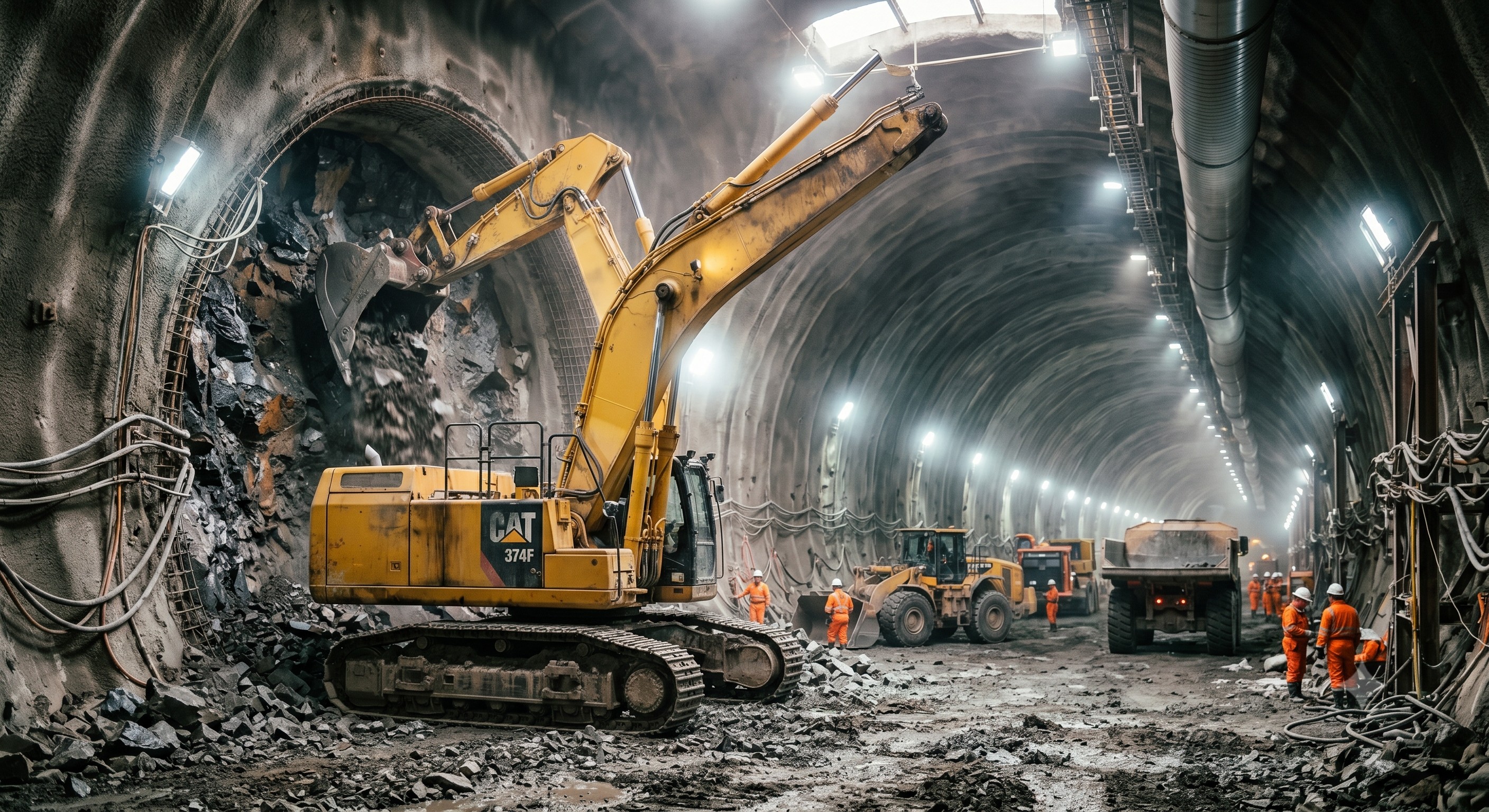
In the demanding world of underground construction, efficiency and safety are paramount. As infrastructure projects burrow deeper and navigate more complex geological formations, the machinery employed must offer unparalleled precision, power, and durability. The crawler excavator has emerged as the backbone of tunnel engineering, serving as a key carrier machine for tasks ranging from rock excavation to material handling . Unlike standard excavators, tunnel-specific models are engineered to operate within the confined, hazardous environments of a tunnel face, offering solutions where traditional equipment fails.

For project managers and lead engineers, selecting and operating the right crawler excavator is critical to maintaining project timelines and controlling costs. This guide provides a deep technical dive into the powertrain, structural design, and operational best practices for these machines, ensuring optimal performance in underground applications.

Core Powertrain & Structural Design for Underground Durability

The operational environment of a tunnel presents unique challenges: high dust levels, limited ventilation, confined spaces, and the constant risk of falling debris. Consequently, a tunnel crawler excavator is not merely a standard machine with a bucket; it is a specialized piece of engineering that prioritizes safety, compactness, and brute force.

Engine and Emissions Compliance

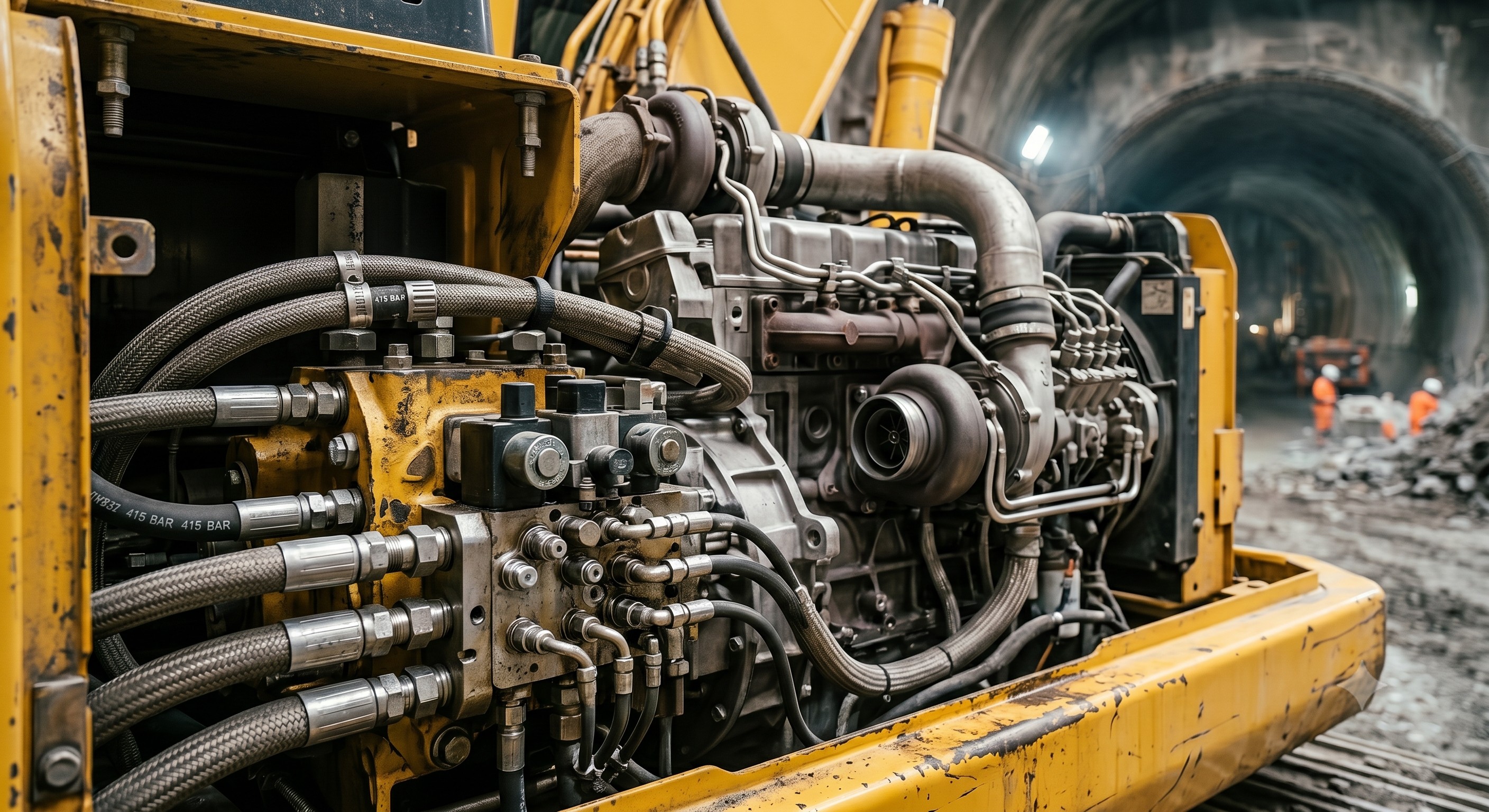
Modern tunnel excavators are powered by high-performance diesel engines that meet stringent emission standards to ensure safe operation in poorly ventilated areas. For example, the Liebherr R 950 Tunnel Litronic is powered by a Tier 4 Final compliant engine, delivering 204 net horsepower (152 kW) . Similarly, the Develon DX235RTF-7 utilizes a DL06V engine that complies with EU Stage V emissions standards, providing 141 kW (189 HP) of power . These engines feature advanced turbocharging and intercooling to maintain performance at high altitudes and in high-temperature underground conditions .

Hydraulic System Performance

Hydraulic output is the lifeblood of a tunnel excavator, dictating breakout force and attachment performance. Key metrics include maximum system pressure and flow rate (L/min) . The Liebherr R 950, for instance, operates a hydraulic system at 5,076 psi with a variable displacement double pump configuration, providing up to 238 liters per minute of flow . This high-throughput system is essential for operating high-performance attachments like concrete demolition shears or rock splitters, especially when equipped with auxiliary circuits for cooling to manage thermal loads during continuous operation .

Chassis and Undercarriage Durability

The crawler undercarriage provides the necessary stability and traction on the uneven, often wet floors of a tunnel. The chassis is engineered with a short tail swing radius and compact dimensions to navigate tight spaces, such as the 2,990 mm overall width of the Develon DX235RTF-7 . Safety features are paramount; hoses and lines are routed along the side of the boom, and hydraulic cylinders are positioned to protect them against falling rocks . Protective covers shield the bucket cylinder and links, while the cab is typically reinforced to meet ROPS, FOPS, and FGPS safety standards . The booms often feature a 45° tilting function to allow the excavator to work efficiently against the tunnel face without repositioning the machine .

Technical Specifications

To ensure the right machine is selected for the project, engineers must compare key parameters such as operating weight, engine power, and hydraulic capacity. The table below highlights a comparison of leading tunnel-specific models.

Parameter Develon DX235RTF-7 Liebherr R 950 Tunnel Liebherr R 930 Tunnel
Engine Power 141 kW (189 HP) 152 kW (204 HP) 130 kW (175 HP)
Operating Weight 25,689 kg 45,300 kg (approx. 99,870 lbs) 33,700 - 34,550 kg
Max System Pressure N/A 350 bar (5,076 psi) N/A
Emission Standard EU Stage V Tier 4 Final EU Stage V
Max Travel Speed 5.8 km/h N/A N/A

Comparative Advantage: TCO and ROI in Tunnel Engineering

Investing in specialized tunnel excavators offers a significant return on investment (ROI) compared to adapting standard machines. The key advantages lie in Total Cost of Ownership (TCO) and operational efficiency.

  • Fuel Efficiency: Advanced engine technology and optimized hydraulics reduce fuel consumption. The Develon DL06V engine is engineered to deliver substantial power while reducing fuel consumption and emissions, a critical factor in projects with high operating hours .
  • Reduced Downtime: Specialized protective devices against mechanical and thermal damage minimize costly repairs . Heavy-duty tracks and reinforced booms extend service life in abrasive underground conditions.
  • Versatility: A single tunnel excavator can perform multiple tasks (drilling, splitting, mucking, scaling) with quick-attach systems, reducing the need to mobilize multiple machines . This flexibility is a major factor in lowering TCO.
  • Safety & Precision: The high precision and low-vibration operation of these machines allows for controlled demolition and rock splitting, reducing the risk of overbreak and ensuring the stability of adjacent structures . This precision minimizes secondary damage and reduces the cost of shotcrete and support systems.

Heavy-Duty Application Scenarios

Crawler excavators serve as the primary carrier machine across a spectrum of heavy-duty underground applications .

1. Rock Excavation and Non-Explosive Demolition

In tunnel construction, controlled rock excavation is critical. Crawler excavators equipped with hydraulic rock and concrete splitters use wedge and pressure elements to generate controlled crack patterns . This method, often used in the New Austrian Tunneling Method (NATM), offers a low-vibration alternative to blasting, preserving the integrity of the surrounding rock mass. The robust undercarriage allows the machine to handle the high break-out forces required to dislodge split material safely .

2. Primary and Secondary Demolition

During the construction of underground stations or cross passages, concrete demolition shears attached to the excavator are used to break reinforced concrete and expose reinforcement . The stability of the crawler chassis ensures short, safe cycles when pulverizing thick structural elements. For strip-out operations, compact models with rubber pads protect sensitive floors while using Multi Cutters to separate installations .

3. Mucking and Logistics

Post-excavation, the primary role of the excavator is mucking—the removal of spoil. With a heavy-duty bucket, the excavator fills mine dump trucks or conveyor systems. The high travel speeds (up to 5.8 km/h on the Develon DX235RTF-7) and high drawbar pull ensure efficient movement of material from the tunnel face to the logistics chain .

Safety Protocols and Operational Best Practices

Operating a crawler excavator in a tunnel requires strict adherence to safety protocols to prevent injuries and equipment damage .

  • Pre-Operation Inspection: Operators must inspect the hydraulic system, engine, and braking system. A test run must be conducted to ensure all controls function normally . Special attention must be paid to hydraulic oil temperature, which should be maintained between 50°C and 80°C .
  • Maneuvering in Confined Spaces: In tight tunnel sections, operations must be conducted at slow speeds with attention to clearance . The operator must ensure the working device does not contact the tunnel walls, utilizing the machine's tilting boom kinematics to reach the face safely without swinging the upper carriage .
  • Slope Management: When working on slopes, the excavator must be positioned to avoid crossing the tipping line. When walking uphill, the cab faces the uphill direction; downhill, it faces downhill. The bucket should be kept 20-30 cm from the ground for stability .
  • Loading and Unloading: During loading operations, the excavator must wait for haul trucks to stop completely. Passing the bucket over the truck cab is strictly prohibited .
  • Post-Operation: Upon completion, the machine must be parked on level ground if possible, with the bucket lowered to the ground and all controls in neutral .

Conclusion

Operating a crawler excavator in tunnel engineering requires a blend of technical expertise, adherence to safety standards, and an understanding of the machine's sophisticated systems. From the high-pressure hydraulics and Tier 4/EU Stage V engines to the specialized undercarriage and safety cabs, these machines represent the pinnacle of heavy equipment engineering for underground construction. By leveraging the high breakout forces, low-vibration demolition capabilities, and compact design of these excavators, project teams can significantly enhance industrial productivity, reduce project timelines, and ensure the safety of their workforce on some of the world's most challenging infrastructure projects.

RFQ