Categories

Tunnel Excavator Maintenance & Procurement FAQ

Expert answers to common maintenance, specs, and operational questions regarding the tunnel excavator.
Jun 22nd,2026 11 Views

Overview

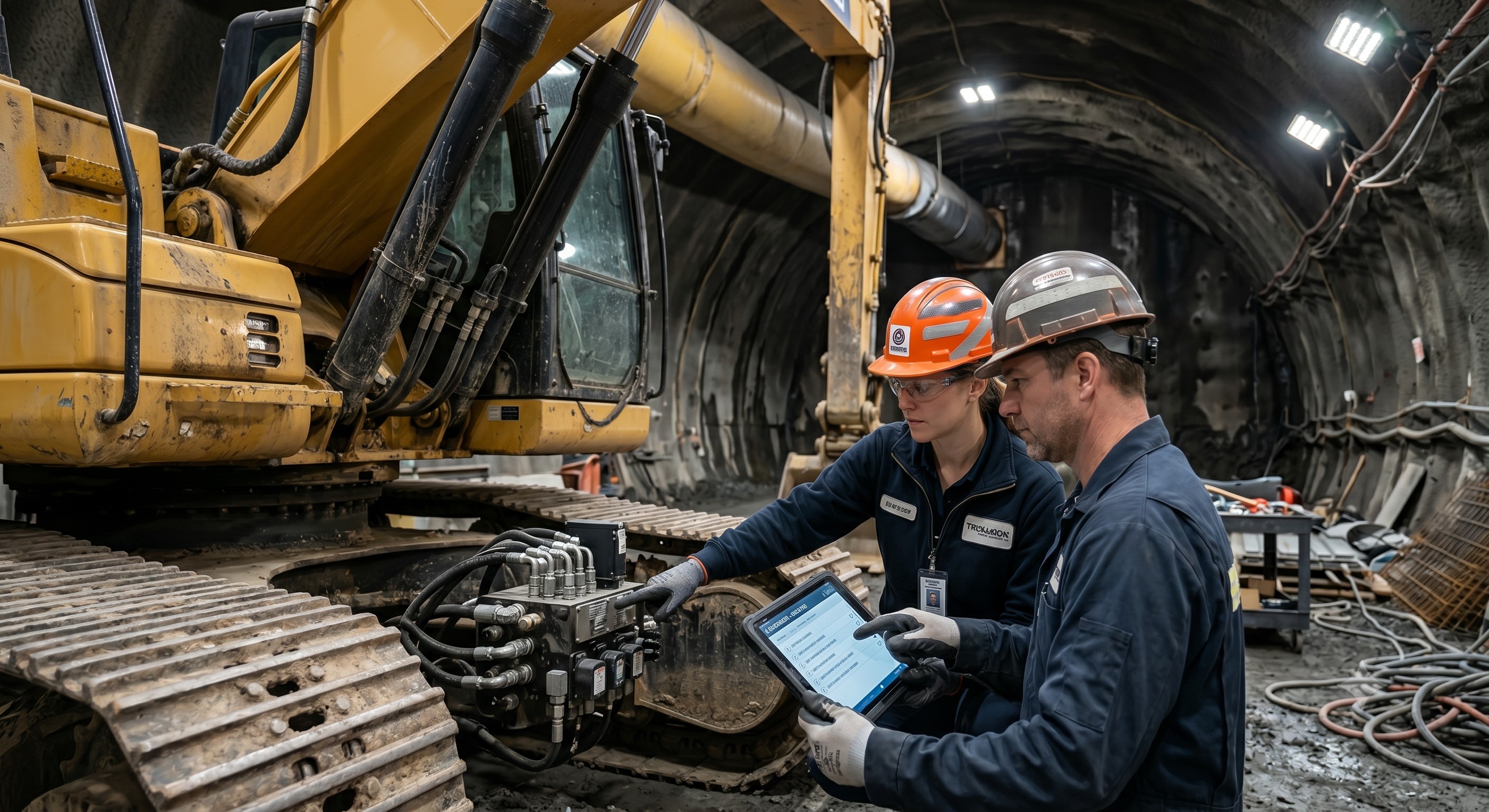
Operating a crawler excavator in the confined, high-stakes environment of tunnel engineering requires specialized knowledge and adherence to strict protocols. This FAQ addresses the critical concerns of B2B procurement and fleet managers, covering everything from the nuances of hydraulic systems and attachment compatibility to rigorous maintenance schedules designed to maximize uptime and safety. The following expert answers provide definitive guidance for ensuring your tunnel excavation projects are efficient, cost-effective, and compliant with industry standards.

Frequently Asked Questions

Q1: What is the standard maintenance interval for a tunnel excavator, and does it differ from standard excavators?

The standard maintenance schedule for a tunnel excavator follows a structured hourly plan, with critical intervals at 10, 50, 250, 500, and 2000 hours, similar to standard models but with a crucial emphasis on more frequent hydraulic component checks due to the harsh, dusty conditions . A daily (every 10 hours) walk-around inspection, fluid level checks, and greasing of the working attachment and swing circle are mandatory . However, for severe applications like tunnel construction with attachments like hydraulic breakers, servicing intervals are significantly shorter; for example, a thorough check of a breaker may be required every 600 hours instead of the standard 1000-2000 hours . The hydraulic system typically requires a full oil change every 2000 operating hours or annually .

Q2: How often should the hydraulic fluid be replaced in a tunnel crawler excavator?

The hydraulic fluid in a tunnel crawler excavator should be replaced every 2000 operating hours or at least once a year, according to heavy equipment standards . However, this interval can be extended to up to 5000 hours if using a high-performance, extended-drain hydraulic fluid specifically designed for the latest models . Fleet managers must also adhere to the initial break-in schedule, which often requires the first oil change after the first 100 hours, the second at 600 hours, and every 600 hours thereafter . Always consult the specific machine's operator manual and consider using a high-viscosity index (HVLP 46) fluid like PETRONAS Tutela HYDROSYSTEM 46 LL to ensure optimal performance and longevity .

Q3: What is the maximum payload or operating weight of a typical tunnel excavator?

The maximum operating weight of a typical tunnel crawler excavator ranges from 7 tons to 80 tons, with a common range being 7 to 80 tons, depending on the specific model and configuration . These machines are purpose-built for underground conditions; for instance, the Liebherr R 930 Tunnel is a 30-ton class machine designed to replace previous compact models, offering a balance of power and maneuverability . Operators must always be aware of the total transport height, especially when navigating tunnels and bridges, to avoid over-height violations .

Q4: What attachments are compatible with a tunnel crawler excavator?

Tunnel crawler excavators are compatible with a wide range of high-performance hydraulic attachments, including hydraulic hammers, rock cutters, demolition shears, concrete splitters, and specialized tunnel ripper buckets . The key to compatibility lies in matching the attachment's hydraulic requirements (flow rate in L/min, system pressure) and weight to the carrier machine's auxiliary circuit capabilities and load moment limits . Modern models, such as the Liebherr R 930 Tunnel, are often equipped with quick coupling systems, allowing for fast, safe changes between tools like a grading blade for stabilization and a cutter for rock excavation . Consult manufacturer recommendation lists to ensure proper sizing, as attachments from other manufacturers may also be used if they fall within the specified weight and power ranges .

Q5: What are the engine emissions standards for tunnel excavators?

While specific EPA Tier or EU Stage emission standards for underground construction equipment are not detailed in the provided excerpts, tunnel excavators are available with both standard diesel drives and increasingly popular emission-free electric drives . The shift towards electric and low-emission diesel engines is critical in confined tunnels to protect worker health and meet strict environmental regulations. For instance, modern Volvo tunnel excavators can be equipped with electric drives, offering a zero-emission solution for underground operations . Procurement managers should inquire about the specific engine emissions certification for their region and consider electric or Stage V-compliant diesel models for new projects.

Q6: What safety and operational procedures are critical when operating a crawler excavator in a tunnel?

Critical safety and operational procedures for tunnel excavation include maintaining a safe distance from overhead lines (a minimum of 5 meters) , ensuring clear communication with personnel, and never positioning the excavator to work simultaneously at two separate faces . Key operational guidelines include sounding a signal before moving, traveling downhill at low steady speeds, and never using the bucket to strike or mechanically crush hard objects . To maintain stability, the machine should be positioned to avoid crossing the tipping line, especially when working on slopes . Post-operation, the machine must be parked with the bucket lowered to the ground and all controls in neutral, and operators are required to perform a thorough inspection of the hydraulic system, engine, and brakes before each shift .

Q7: What are the best practices for maintaining a hydraulic breaker attachment used in tunneling?

Best practices for maintaining a hydraulic breaker in a tunnel environment involve a strict lubrication and inspection schedule tailored to the severe application . Key intervals include: greasing the tool shank and bushing every 2 hours, checking the tool retaining pins and condition every 10 hours, and inspecting the tool shank, bushing, hoses, and wear plates every 50 hours . Due to the harsh conditions of tunnel construction, the interval between overhauls is significantly shorter than for standard applications, requiring more frequent thorough checks .

RFQ