Categories

The Ultimate Guide: Can an Excavating Machine Handle Site Clearing?

A comprehensive technical analysis of how modern excavators are purpose-built for site clearing, featuring deep dives into powertrain engineering, durability metrics, and heavy-duty applications.
Jun 16th,2026 29 Views

Introduction: The Modern Imperative for Efficient Site Clearing

The construction and industrial sectors face mounting pressure to accelerate project timelines while managing escalating costs. Site clearing—the critical first phase involving the removal of trees, brush, rock, and debris—often becomes a bottleneck. The question, "Can an excavating machine handle site clearing?" is no longer a matter of capability but of strategic optimization. Modern excavators, particularly those designed for heavy-duty land clearing, offer a robust, cost-effective, and data-driven solution to these challenges .

Core Powertrain & Structural Design: The Engineering Backbone

To effectively manage site clearing, an excavating machine must possess an exceptionally durable powertrain and structural architecture. The latest generation of heavy-duty excavators, such as the Volvo EC500, are engineered with high-torque, fuel-efficient engines. The EC500 features a 423 hp, 13-liter D13J engine that delivers peak torque of 2070 Nm at just 1300 rpm . This engine design prioritizes low-end torque, which is essential for the constant, heavy-load demands of ripping and material handling, while also maximizing fuel efficiency and meeting stringent EPA Tier 4 / EU Stage V emission standards.

Heavy-Duty Undercarriage and Stability

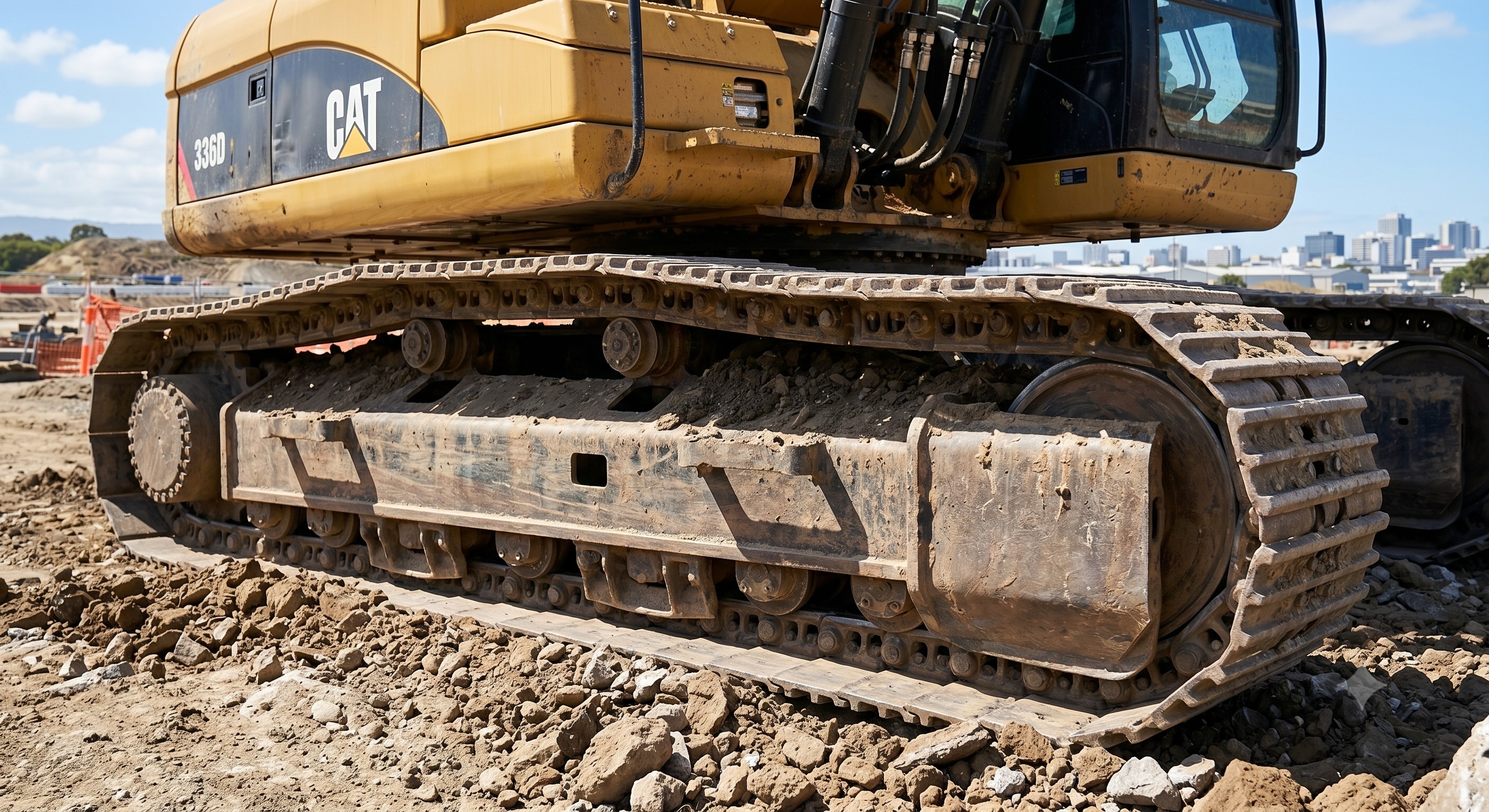
Site clearing often takes place on uneven, unstable terrain. The undercarriage is paramount for stability and machine longevity. The Cat® 325 Excavator features a new heavy-duty (HD) undercarriage configuration with an oversized 203-mm (8-in) track pitch, enhancing stability and durability . This design is complemented by a dedicated 7.5-tonne (16,540-lb) counterweight, which provides crucial balance and control when wielding heavy attachments like rippers or rakes on a variable angle boom. This configuration ensures the machine can handle the extreme side loads and forces generated during land clearing operations .

Intelligent Electro-Hydraulic Systems

The fusion of power and precision is achieved through advanced electro-hydraulic systems. These systems use electronic sensors to monitor operator joystick movements, sending signals to an onboard computer that instantly adjusts the main control valve. This results in faster cycle times and more precise control over the boom, arm, and bucket, making the clearing process more efficient and reducing operator fatigue .

Technical Specifications for Site Clearing

Choosing the right machine for the job hinges on matching technical specifications to the project's demands. The following table illustrates key parameters for a modern heavy-duty excavator configured for land clearing and site preparation.

Key Parameter Technical Specification
Engine Horsepower (Gross) ≥ 420 hp (e.g., Volvo EC500)
Operating Weight ~ 50-80 Tons (e.g., Cat 325 HD Config)
Engine Torque ~ 2070 Nm @ 1300 rpm
Hydraulic System Advanced Electro-hydraulic with Intelligent Control
Undercarriage Heavy-Duty Long Configuration with Oversized Track Pitch
Emission Standard EPA Tier 4 / EU Stage V Compliant
Key Attachment Hydraulic Ripper & Excavator Rake

Attachment Versatility

An excavator's site-clearing prowess is significantly amplified by its attachment ecosystem. Rippers offer a cost-effective alternative to blasting, ideal for fracturing rock and compacted soil with lower cost per ton and less environmental impact . Attachments like the Excavator Rake are designed for efficient clearing of brush and debris, with hardened alloy steel teeth for long service life . The ability to quickly switch between attachments via a quick coupler allows a single machine to transition from ripping rock to loading debris, maximizing its utility on site .

Comparative Advantage: ROI and TCO Analysis

When compared to traditional methods like dozers or blasting, an excavator equipped for site clearing offers a superior return on investment (ROI) and lower total cost of ownership (TCO).

  • Fuel Efficiency: Modern Stage V compliant engines and electro-hydraulic systems are engineered to maximize work output per gallon of fuel, significantly reducing operating costs compared to older, less efficient machinery.
  • Reduced Labor Costs: Advancements in semi-autonomous and autonomous systems are demonstrating substantial labor savings. Projects like a 130-acre manufacturing site have used autonomous excavators to move over 65,000 cubic yards of earth and rock, showing significant productivity gains by allowing operators to focus on more critical tasks .
  • Versatility: A single excavator with a suite of attachments can replace multiple specialized machines, reducing capital expenditure and logistics overhead.

Heavy-Duty Application Scenarios

The excavating machine is integral to site clearing across a multitude of heavy-duty applications.

Construction Site Preparation

For projects ranging from commercial buildings to industrial facilities, excavators are essential for grubbing, stripping topsoil, and removing subsurface obstructions. The ability to handle reinforced concrete, as evidenced by the Volvo EC500's role in demolition and site remediation, is crucial for preparing ground for new foundations .

Mining and Quarry Operations

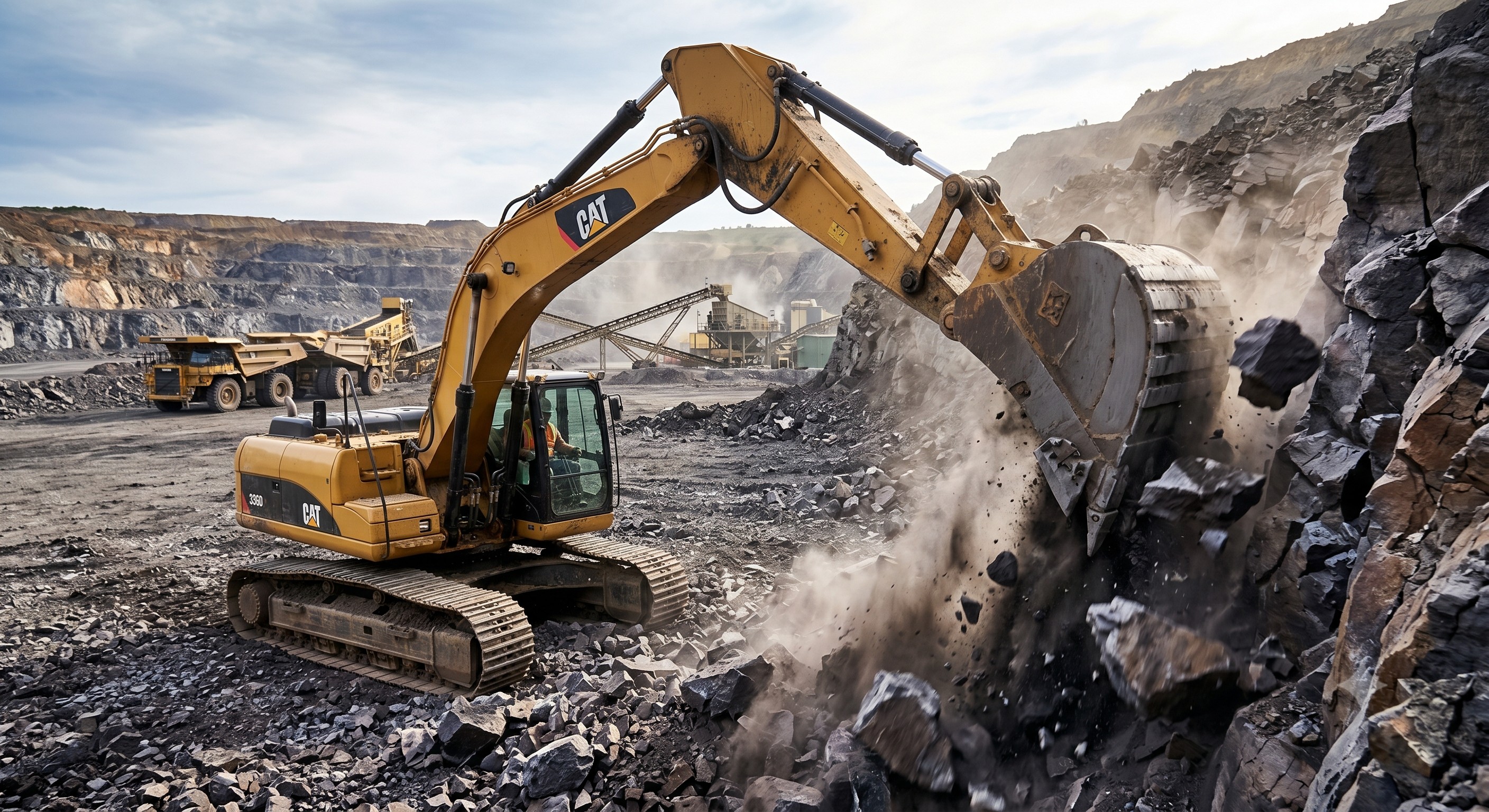
In quarry production, excavators equipped with rippers and extreme-duty rock buckets achieve a lower cost per ton than blasting . They are instrumental in primary overburden removal and material extraction, with robust undercarriage designs ensuring they can withstand the punishing conditions of a mining environment .

Earthmoving and Large-Scale Civil Projects

For extensive earthmoving tasks, such as those encountered in large civil projects, the excavator is a cornerstone of the equipment fleet. With capabilities to move hundreds of thousands of cubic yards of material, these machines are fundamental to executing project plans efficiently .

Conclusion: The Future of Industrial Productivity

In conclusion, the modern excavating machine is not only capable of handling site clearing but has evolved into a specialized, highly efficient, and cost-effective tool for the task. Through advanced powertrain engineering, durable structural design, and versatile attachment systems, these machines deliver superior performance across construction, mining, and earthmoving applications. As the industry moves towards greater automation and sustainability, the excavator will remain at the forefront of industrial productivity, driving efficiency and profitability on job sites worldwide .

RFQ