Categories

Which Demolition Excavator Is Safest for Urban Demolition? | Expert Analysis

Compare the safest demolition excavators for urban environments. Expert analysis of Volvo & Cat models with ISO safety, E-Fence & stability systems.
Jun 23rd,2026 10 Views

Introduction: The High-Stakes Challenge of Urban Demolition

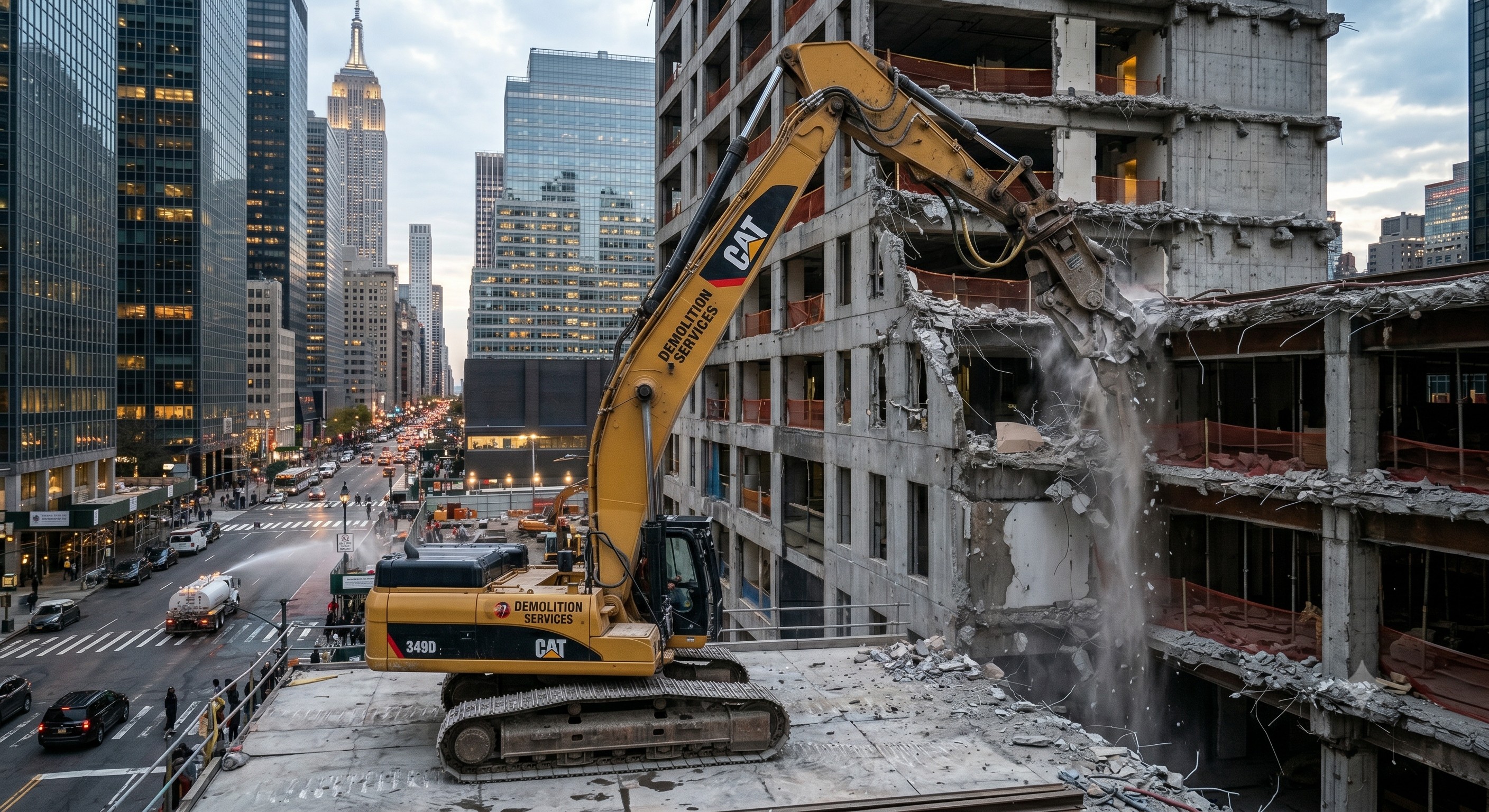
Operating heavy machinery in densely populated urban environments presents a unique set of challenges that test the limits of both equipment and operator. The margin for error is virtually zero; structures are confined, public safety is paramount, and the complexity of dismantling multi-story buildings requires precision and control. For project managers and contractors, the question isn't just about power, but about control and, most critically, safety. The evolving landscape of urban demolition demands a machine that can deliver brute force with surgical precision, ensuring the safety of the operator and the surrounding community. This is where the modern demolition excavator comes into play as the robust solution, integrating advanced engineering to mitigate risk on the most demanding job sites .

Core Powertrain & Structural Design: The Foundation of Safety and Performance

The safety of a demolition excavator begins with its core architecture. A robust powertrain, durable chassis, and intelligent hydraulic system are not just about performance—they are fundamental to safe operation.

Powertrain and Emissions Compliance

Modern demolition excavators are powered by high-efficiency engines that balance power with environmental responsibility. For instance, the Cat® 330 UHD utilizes the Cat C7.1 TTA engine, delivering 205 kW (275 hp) of gross power. This engine is certified to meet stringent global emission standards, including U.S. EPA Tier 4 Final, EU Stage V, and Japan 2014, ensuring compliance in international markets without sacrificing performance . Similarly, the Volvo EC950 High Reach is engineered to meet Volvo's stringent Ultra High Reach (UHR) stability criteria, reflecting a design philosophy where power is harnessed with maximum control .

Hydraulic Systems and Precision Control

Hydraulic systems in these machines are designed for smooth, precise movements, which is critical when maneuvering heavy attachments near sensitive structures. The integration of smart technologies, such as Cat's 2D E-Fence system, is a game-changer for urban safety. This system uses sensors to define a virtual boundary for the front linkage, preventing the excavator from colliding with obstacles such as buildings, power lines, or the machine itself. This not only protects the equipment from damage but, more importantly, safeguards the operator and surrounding personnel .

Chassis Durability and Stability

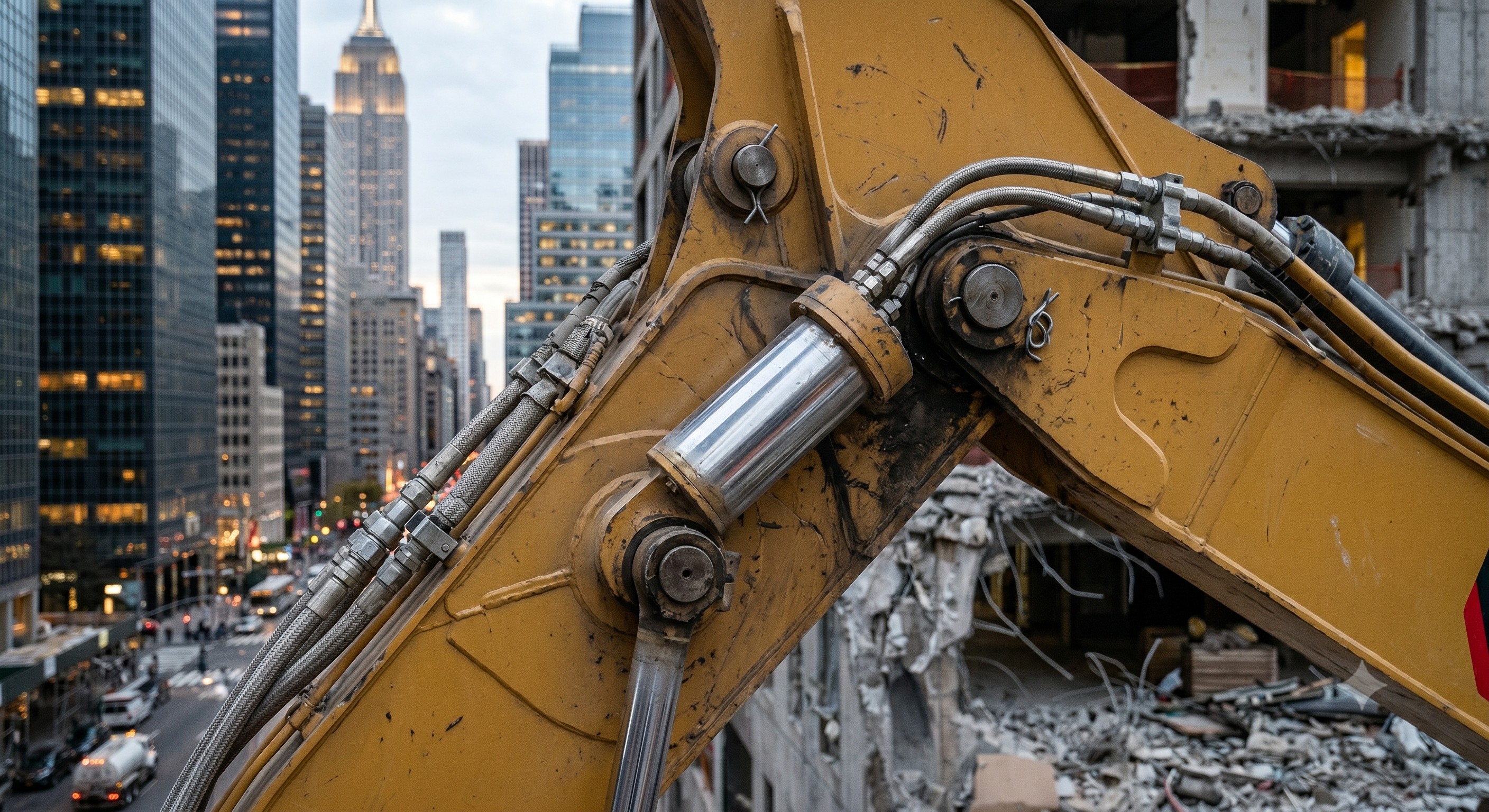
Stability is non-negotiable in urban demolition, particularly when working at height. The Cat 330 UHD offers a choice between a Long Narrow undercarriage for transport mobility and a Hydraulic Variable Gauge undercarriage that can extend for enhanced stability when wielding heavy demolition tools . Volvo's approach to stability is comprehensive, with the EC950 High Reach featuring a purpose-built upper frame, larger boom and cylinder pins, and a specially developed ring gear to withstand the immense torsional forces generated during high-reach demolition .

Technical Specifications

To provide a data-driven comparison of safety and capability, let's examine the key technical specifications of two leading purpose-built demolition excavators.

Key Parameter Cat® 330 UHD Volvo EC950 High Reach
Engine Horsepower 205 kW (275 hp) Varies by configuration, up to ~ 400,000 lbs operating weight
Operating Weight 46,000 kg (101,400 lb) Up to 189,950 kg (418,768 lb)
Max. Pin Height 20.0 m (65’ 6”) 49.0 m (160’ 9”)
Max. Tool Weight at Height 3,300 kg (7,275 lb) Up to 8,100 kg (17,857 lb)
Key Safety Systems 2D E-Fence, Stability Monitoring, TOPS-rated Cab Total Moment Indicator (TMI), P5A Windows, FOG, Dust Suppression
Emission Compliance EPA Tier 4, EU Stage V Capable of meeting Tier 4 / Stage V standards

Comparative Advantage: Safety, TCO, and ROI

When evaluating demolition excavators, the Total Cost of Ownership (TCO) and Return on Investment (ROI) are critical. However, in the urban demolition sector, the value of advanced safety features must be factored into this equation.

  • Enhanced Safety ROI: The upfront investment in machines with features like the Cat 2D E-Fence, Volvo Total Moment Indicator (TMI), and 360-degree camera systems is offset by a significant reduction in accident risk. By preventing accidents, these systems protect against costly project delays, legal liabilities, and damage to reputation. Volvo's Smart View cameras with optional obstacle detection further enhance operator awareness .
  • Fuel Efficiency & Emissions: Both Caterpillar and Volvo offer highly fuel-efficient engines that meet the latest emission standards. This results in lower operating costs and ensures compliance with increasingly strict urban emission regulations .
  • Dual-Purpose Versatility: The Cat 330 UHD's ability to switch from a demolition boom to a standard construction boom in minutes enhances its ROI. It allows a single machine to tackle demolition projects and then be redeployed for general excavation or material handling, maximizing machine utilization and providing a faster payback period .
  • Ground-Level Maintenance: Design for serviceability is a key factor in reducing TCO. Machines like the 330 UHD allow daily maintenance checks (engine oil, hydraulic oil, coolant) to be performed safely from ground level, reducing the risk of falls and minimizing downtime .

Heavy-Duty Application Scenarios

Purpose-built demolition excavators are essential across a range of heavy-duty applications, from selective urban dismantling to large-scale industrial projects.

Urban Demolition and Dismantling

This is the primary domain of machines like the Cat 330 UHD. Its compact transport width of less than 3 meters and maximum pin height of 20 meters (65.6 feet) make it ideal for residential and commercial demolition projects in crowded city centers. The machine is specifically designed for 5 to 6-story work, providing the reach and power to dismantle structures safely from the top down . The Develon DX140RDM-7 is another example, purpose-built with a reduced tail swing and a 360° all-around view camera (AVM) to navigate the tightest urban environments safely .

High-Reach Demolition of Large Structures

For the tallest and most demanding projects, the Volvo EC950 High Reach is a reference machine. With an operating weight exceeding 400,000 pounds and a maximum reach of 161 feet (49 meters), it is designed for the dismantling of large industrial complexes, power plants, and skyscrapers . Its modular design allows for easy transport, and the built-in dust suppression system addresses the growing regulatory scrutiny on urban worksite emissions .

General Earthmoving and Site Preparation

Due to their versatility, many demolition excavators can be reconfigured for standard earthmoving tasks. This dual-purpose capability, as seen with the Cat 330 UHD and the updated Volvo EC400 Straight Boom, allows contractors to use their high-reach machines for site preparation, digging, and truck loading when not engaged in demolition, maximizing fleet utilization and project profitability .

Conclusion: Advancing Industrial Productivity Through Safety

The question of which demolition excavator is safest is best answered by a holistic assessment of the machine's design, technology, and compliance with industry standards. The Cat 330 UHD stands out for its fusion of advanced safety features like the 2D E-Fence, a highly versatile dual-purpose boom system, and a focus on urban mobility. The Volvo EC950 High Reach and the new straight boom models represent the pinnacle of high-reach safety, incorporating unprecedented stability monitoring and high-strength cab protection. The future of urban demolition is inextricably linked to the advancement of machine safety and compliance, as evidenced by the development of new European standards like prEN 17998 for demolition machinery safety, and the EU 2023/1230 Machinery Regulation . Ultimately, the safest demolition excavator is one that combines powerful engineering with intelligent control, ensuring that operators can confidently and efficiently tackle the most challenging projects while setting new benchmarks for jobsite safety.

RFQ